
Canada
Ontario team

Anne-Emanuelle Birn
Anne-Emanuelle Birn is a Professor of Global Development Studies and Global Health at the University of Toronto. Her research explores the history, politics, and political economy of international/global health, focusing on Latin American health and social justice movements, among other topics. Her books include: Marriage of Convenience: Rockefeller International Health and Revolutionary Mexico (Rochester, 2006); Comrades in Health: US Health Internationalists, Abroad and at Home (Rutgers, 2013); Oxford University Press’s Textbook of Global Health (2009; 2017/18); Peripheral Nerve: Health and Medicine in Cold War Latin America (Duke, 2020), and Going Public: The Unmaking and Remaking of Universal Healthcare (Cambridge 2023). Her most recent projects examine the history of child health/child rights in Uruguay; social justice-oriented South-South health cooperation; health harms of Canadian extractivism; and the history of global/international health in the Americas. A former Canada Research Chair in International Health, she was recognized among the top 100 Women Leaders in Global Health, and named to the List of Canadian Women in Global Health. She is a core member-activist of the People’s Health Movement-Canada. In 2023 she received the Arthur Viseltear Prize for Lifetime Achievement in Public Health History, awarded by Columbia University’s Mailman School of Public Health and the Medical Care Section, American Public Health Association. She is the lead PI of the SMAPL project and heads the Ontario, Canada team.

Andrea Cortinois
Over the past 30 years, Dr. Cortinois has worked as a journalist, researcher, educator, and manager of health-related interventions on four continents, mainly in the Global South. He has earned a Master of Public Health degree with a global health emphasis in the UK, and a Ph.D. in the Institute of Health Policy, Management, and Evaluation at the University of Toronto. Currently, he is an Assistant Professor, Teaching Stream, cross-appointed between the Human Biology Program, Faculty of Arts and Science, and the Dalla Lana School of Public Health. He teaches both graduate and undergraduate courses in global migration and health and global health. Dr. Cortinois’ research interests include the impact of the global economic regime and the planetary environmental crises on displacement; migration as an intermediate determinant of health, with particular attention given to mechanisms of inclusion/exclusion, precariousness, and detention/deportation as mediating factors; and the social costs of migration in countries of origin.

Denise Gastaldo
Denise Gastaldo, PhD, Dr. Honoris Causa (Universidade da Coruña, Spain), is a methodologist, researcher, educator, mentor, and an associate professor at the Bloomberg Faculty of Nursing and at the Centre for Critical Qualitative Health Research, Dalla Lana School of Public Health, University of Toronto. For the last 25 years, she has worked internationally to build capacity for health research and to develop equitable approaches to produce transformative health knowledge. Her empirical scholarship concentrates on the health consequences of social inequity, in particular inequities experienced by migrant workers. Dr. Gastaldo is the co-editor of four qualitative research books published in Spanish, Portuguese, and English, including contributions from 20 countries, in addition to numerous articles. As a methodologist, she has co-created arts-based and participatory qualitative research designs that have been used in over 15 countries. Presently, she is the coordinator of the Ibero-American Qualitative Health Research Network, a member of the Brazil-Canada Qualitative Health Research Network, and is cross-appointed to graduate programs in Latin America and Europe.

Janet McLaughlin
Janet McLaughlin, PhD, is an Associate Professor of Health Studies and a Research Associate at the International Migration Research Centre at Wilfrid Laurier University in Ontario, Canada. Since 2004, she has been conducting research on issues related to migrant agricultural workers’ health and human rights, and their access to health care and protections in Canada, and their sending states, particularly Mexico and Jamaica. This scholarship has formed the basis of numerous academic articles, book chapters, policy papers, op-eds, and documentary films, as well as over 100 media interviews/profiles. Dr. McLaughlin is co-founder and co-coordinator of the Migrant Worker Health Project and the Migrant Worker Health Expert Working Group (www.migrantworker.ca), initiatives that aim to increase health accessibility, awareness, and protections for migrant workers. Dr. McLaughlin is part of the Ontario migrant worker advocacy SMAPL team.

Jeannie Samuel
Jeannie Samuel is an Assistant Professor in the Department of Social Science’s Health and Society (HESO) program at York University and a faculty member with the Graduate Program in Development Studies. She is also a Faculty Fellow at York’s Dahdaleh Institute for Global Health Research and the Centre for Research – Latin America and the Caribbean. Jeannie is currently pursuing an interdisciplinary research agenda with two major areas. The first focuses on human rights-based accountability mechanisms to promote equitable access to health care services. The second uses participatory action research to explore the intersection between public health emergencies and the climate crisis. Her current research is done in collaboration with partners in Guatemala and Peru, with grants from Canada’s Social Science and Humanities Council, New Frontiers in Research Fund, and the International Development Research Centre.

Krizia Erika Paylago
Krizia Erika Paylago is a Master of Public Health graduate of the University of Toronto. Arriving as a temporary resident in Canada in late 2019, she extended her stay in early 2020 due to COVID-19, immersing herself in the struggles of fellow migrants. This revelation ignited her passion to assist the migrant community, leading her to become the pioneering Filipino community outreach worker at the Occupational Health Clinics for Ontario Workers, Inc. (OHCOW) in 2021. Her focus centred on addressing the pressing workplace health and safety needs of migrant agricultural workers (MAWs), a mission intensified by the pandemic. This journey also connected her to the SMAPL Ontario case study, exploring MAW activists/advocates’ pandemic interactions with policymakers at various government levels. Transitioning from clinical practice in the Philippines to public health, social science, and global health in Canada, her role as an OHCOW Regional Service Coordinator and Filipino Outreach Worker in Southwestern Ontario enriches the case study’s academic exploration. Her journey blends academia and hands-on advocacy, illuminating Canada’s migrant experience with purposeful evolution.

Megan Botha
Megan Botha has a passion for development work and is committed to community engagement and advocacy. Megan holds a bachelor’s degree in International Development with emphasis in Rural and Agricultural Development from the University of Guelph. Megan continued at Wilfrid Laurier University, completing her master’s degree in Social Justice and Community Engagement, where she did her major research project on Ontario public health units responses to COVID-19 among migrant agricultural workers in Ontario. She was engaged as a volunteer for the Migrant Worker Health Expert Working Group (MWH-EWG) during her time at Laurier, and is currently working as a research assistant with the Ontario SMAPL team; exploring the interactions between community/activist groups engaged in advocating and supporting migrant agricultural workers in Canada during the COVID-19 pandemic, and policymakers from different levels of government.

Stephanie Mayell
Stephanie Mayell has been conducting community-based health research with migrant agricultural workers in Canada and across rural Jamaica since 2014. Stephanie’s research focuses on the psychosocial determinants of health, mental health, injury, racism, and access to health care and social supports. Stephanie is currently a PhD Candidate in the Medical Anthropology Program at the University of Toronto where she is investigating the ways race and the histories of plantation slavery influence Jamaican farm workers’ experiences of health and injury. Stephanie completed her master’s degree in the Anthropology of Health at McMaster University in 2016, where her thesis investigated Jamaican farm workers’ experiences of stress and resilience while working and living in Southern Ontario. Stephanie is a member of the Migrant Worker Health Expert Working Group (MWH-EWG), and she is currently collaborating on several research projects related to the health of migrant workers in Canada.
Montréal team

Laurence Monnais
Laurence Monnais is professor of the history of medicine and public health at the Institute in medical humanities (IHM), Centre hospitalier universitaire Vaudois (CHUV) – Université de Lausanne, in Switzerland. A specialist of the history and anthropology of health in both Southeast Asia and Quebec, she has worked extensively on colonial health care systems, the pharmaceuticalization of societies and medical pluralism from both a local and global perspective. In the past decade, she has focused her work on measles and the co-production of measles and mass vaccination since the 1960s. During Covid-19 she worked within the Covivre program that intended to mitigate the effects of the pandemic among vulnerable communities in Montreal as a vaccine hesitancy expert. Her next book is a comic book about the experience of Covid-19 in Montreal that will be released this Fall: Carolina Espinosa & Laurence Monnais, Ces vaccinations qui (n’)ont (pas) eu lieu. Chronique pandémique, Montréal: Les Presses de l’Université de Montréal.

Mylène Fauvel
Mylène Fauvel is a postdoctoral researcher at Université Paris-Nanterre and McGill University and a lecturer in the Department of Social and Public Communication at UQAM and the Élisabeth Bruyère School of Social Innovation at Université Saint-Paul. She studies collective action by precarious workers, working and employment conditions in community-based organizations, and labour-community coalition building. She is also a co-researcher at the Groupe interdisciplinaire et interuniversitaire de recherche sur l’emploi, la pauvreté et la protection sociale (GIREPS). She focuses on participatory research methodologies such as observer-participation, militant ethnography, action research and partnership research.
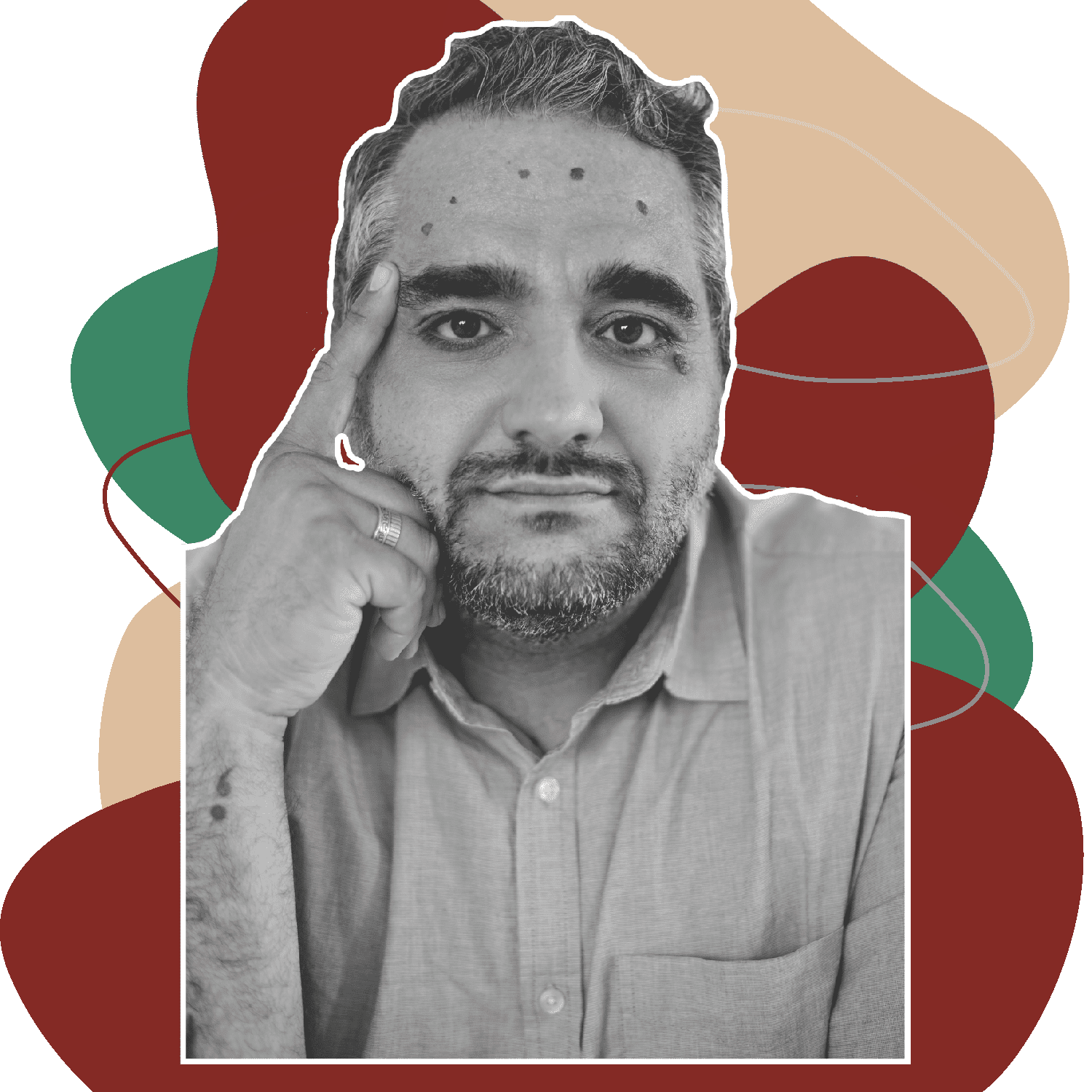
Rabih Jamil
Rabih Jamil holds a PhD in Sociology from the Université de Montréal. He is a member of GIREPS, an interdisciplinary research group on employment, poverty, and social protection, and is currently an investigator at the Observatoire pour la justice migrante. He worked at Sherpa and collaborated closely with the CoVivre program. His research interests focus on platform capitalism, digital work, surveillance, and organization. Rabih has more than 10 years of experience in socio-economic research focusing on informal work, refugees, and migrant workers.